
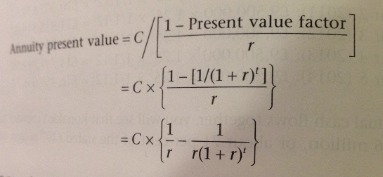
The more times theinterest is compounded within the year, the higher the effective annual interest rate will be. You can use our compound interest calculator to do all the formula work for you. It’ll tell you how much you might earn on your savings,investment or 401k over a period of years and months based upon a chosen number of compounds per year. This formula takes into consideration the initial balance P, the is rubber biodegradable annual interest rate r, the compounding frequency m, and the number of years t. Tibor has extensively used this calculator in various projects, allowing him to project financial outcomes accurately and advise on investment strategies. It’s become an essential tool for anyone needing to calculate the future value of their investments, considering different compounding frequencies and additional contributions.
Example 2 – complex calculation of the value of an investment
Our partners cannot pay us to guarantee favorable reviews of their products or services. The depreciation calculator enables you to use three different methods to estimate how fast the value of your asset decreases over time. Read on to learn more about the magic of compound interest and how it’s calculated. Now, the only thing you have to remember is that the higher the APY value is, the better the offer. By calculating APY, you can see that the first exemplary offer pays the most.

Calculate compound interest step by step
- Examples are hypothetical, and we encourage you to seek personalized advice from qualified professionals regarding specific investment issues.
- When paying interest, the borrower will mostly pay a percentage of the principal (the borrowed amount).
- Note that 10% is, roughly, the long-term annualized return of the S&P 500.
- If you wonder how to calculate compound interest, these formulas provide the answer.
It’s also worth mentioning that there’s a very similar concept known as cumulative interest. Cumulative interest refers to the sum of the interest payments made, but it typically refers to payments made on a loan. For example, the cumulative interest on a 30-year mortgage would be how much you paid toward interest over the 30-year loan term.
How Compound Interest Grows Over Time
Usually, it is presented on an annual basis, which is known as the annual percentage yield (APY) or effective annual rate (EAR). Credit card interest typically kicks in when you don’t pay off your card in full and allow it to roll over past your grace period into the next billing cycle. The money you haven’t paid off will get charged with interest, which is typically compounded daily.
The Effect of Compounding Periods
Mortgage loans, home equity loans, and credit card accounts usually compound monthly. Also, an interest rate compounded more frequently tends to appear lower. For this reason, lenders often like to present interest rates compounded monthly instead of annually. For example, a 6% mortgage interest rate amounts to a monthly 0.5% interest rate.
Use the tables below to copy and paste compound interest formulas you need to make these calculations in a spreadsheet such as Microsoft Excel, Google Sheets and Apple Numbers. The type of credit card you’re applying for can also influence the APR. For example, rewards cards are likely to have higher APRs than non-rewards cards due to the added benefits these cards offer. The number of times in a given unit of time that accumulated interest is capitalized and the balance increases. Learn how to get compounding interest working for your portfolio.
Therefore, the fundamental characteristic of compound interest is that interest itself earns interest. This concept of adding a carrying charge makes a deposit or loan grow at a faster rate. Note that in the case where you make a deposit into a bank (e.g., put money in your savings account), you have, from a financial perspective, lent money to the bank. Take your daily rate of 0.052 percent and your average daily balance of $1,000. Your daily balance is the amount you owe on your card at the end of each day, and your average daily balance is all of those daily balances added up and divided by the number of days in your billing cycle. Compound interest is calculated by applying an exponential growth factor to the interest rate or rate of return you’re using.
This is then broken down into a daily rate, so you can calculate the amount of interest you will be charged for any given day. To convert an APR to a daily rate, divide the APR by 365, the number of days in a year. APY is a measure of how much your money will grow by in one year as a percentage of the initial amount. The number should be present on the account, allowing you to easily compare between options.
If you left your money in that account for another year, you’ll earn $538.96 in interest in year two, for a total of $1,051.63 in interest over two years. You earn more in the second year because interest is calculated on the initial deposit plus the interest you earned in the first year. While simple interest only earns interest on the initial balance, compound interest earns interest on both the initial balance and the interest accumulated from previous periods. The first example is the simplest, in which we calculate the future value of an initial investment.
Annual Interest Rate (ROI) – The annual percentage interest rate your money earns if deposited. As shown by the examples, the shorter the compounding frequency, the higher the interest earned. However, above a specific compounding frequency, depositors only make marginal gains, particularly on smaller amounts of principal. Because lenders earn interest on interest, earnings compound over time like an exponentially growing snowball. Therefore, compound interest can financially reward lenders generously over time.
We believe everyone should be able to make financial decisions with confidence. If you want to find out how long it would take for something to increase by n%, you can use our rule of 72 calculator. This tool enables you to check how much time you need to double your investment even quicker than the compound interest rate calculator.
The following chart demonstrates the difference that the number of compounding periods can make for a $10,000 investment with an annual 7% interest rate over a 10-year period. This variation of the formula works for calculating time (t), by using natural logarithms. You can use it to calculatehow long it might take you to reach your savings https://www.kelleysbookkeeping.com/ target, based upon an initial balance and interest rate. Youcan see how this formula was worked out by reading this explanation on algebra.com. After the first year, John will earn $100 in interest (10% of the initial investment of $1,000). Since his balance is now $1,100, the interest earned will be $110 (10% of the $1,100).
You may choose to set the frequency as continuous, which is a theoretical limit of recurrence of interest capitalization. In this case, interest compounds every moment, so the accumulated interest reaches its maximum value. To understand the math behind this, check out our natural logarithm calculator, in particular the The natural logarithm and the common logarithm section. Compound interest is the https://www.business-accounting.net/the-difference-in-notes-payable-vs-long/ addition of interest to the existing balance (principal) of a loan or saving, which, together with the principal, becomes the base of the interest computation in the next period. Within our compound interest calculator results section, you will see either a RoR or TWR figure appear for your calculation. After 10 years, you will have earned $6,486.65 in interest for a total balance of $16,486.65.
If you turn on the “Inflation (%)” option, then you can also see the adjusted for inflation value as well. You can how over the chart bars to see individual metrics for any of the calculated yearly time series. This article about the compound interest formula has expanded and evolved based upon your requests for adapted formulae andexamples. Please feel free to share any thoughts in the comments section below.